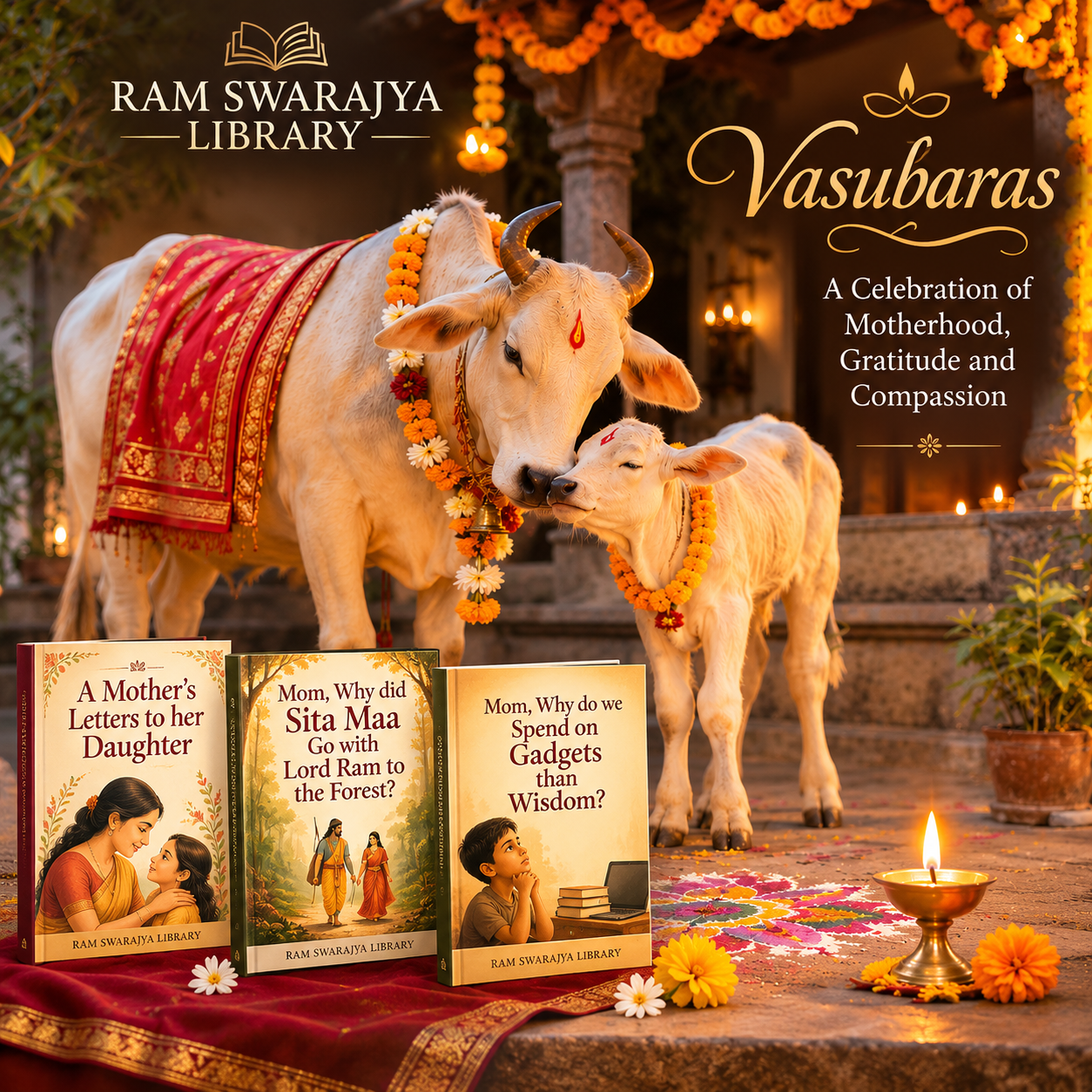
Vasu Baras, also known as Govatsa Dwadashi, is a beautiful Hindu festival that celebrates motherhood, gratitude and the nurturing spirit of nature.
Observed especially in Maharashtra, it marks the beginning of Diwali festivities in many households.
While Diwali is widely associated with lights, sweets and celebrations, Vasu Baras reminds us of something deeper – the importance of gratitude, compassion and respect for all living beings.
What Is Vasu Baras?
Vasu Baras is observed on the Dwadashi (twelfth day) of the Krishna Paksha in the Hindu month of Ashwin, according to the traditional Hindu calendar.
The word ‘Vasu’ is associated with the cow, while ‘Baras’ refers to the twelfth lunar day.
The festival is also known as Govatsa Dwadashi, where ‘Govatsa’ means a calf.
On this auspicious day, cows and their calves are worshipped as symbols of motherhood, nourishment, abundance and selfless love.
Why Are Cows and Calves Worshipped on Vasu Baras?
In Indian culture, the cow has traditionally been regarded as a symbol of nourishment, generosity and motherhood.
Just as a mother nurtures her child with unconditional love, a cow nourishes her calf with care and affection.
The bond between a cow and her calf represents:
- Motherhood: The unconditional love and protection a mother offers her child.
- Nourishment: The importance of nature in sustaining life.
- Gratitude: Respect for the beings and resources that nurture us.
- Compassion: Kindness towards animals and all living creatures.
Worshipping the cow and calf is a way of expressing gratitude for the nurturing forces that sustain life.
How Is Vasu Baras Celebrated?
In Maharashtra, Vasu Baras holds a special place in the Diwali celebrations.
Traditionally, families observe the day by:
- Bathing and decorating cows and calves with flowers and colourful ornaments.
- Applying a tilak and offering prayers.
- Performing rituals to express gratitude and seek blessings.
- Preparing traditional food offerings and sharing festive joy with family members.
For many families, the festival is also an opportunity to introduce children to Indian traditions and teach them the values of gratitude and respect for animals.
The Deeper Message of Vasu Baras: Lessons in Motherhood
Beyond the rituals, Vasu Baras carries a timeless message about motherhood.
A mother’s love is among the purest forms of love we experience.
It is expressed through care, sacrifice, patience, protection and countless little acts of kindness.
The relationship between a cow and her calf beautifully reflects these qualities.
Vasu Baras encourages us to pause and appreciate the mothers in our lives, acknowledge their sacrifices and remember the importance of nurturing the next generation with wisdom and compassion.
It also reminds us that kindness should extend beyond our families to every living being.
Passing Our Traditions and Wisdom to the Next Generation
Festivals are not merely occasions for rituals and celebrations. They are opportunities to pass cultural values, stories and wisdom from one generation to another.
At Ram SwaRajya Library, we believe that meaningful conversations between parents and children can help preserve these values.
Our books, including A Mother’s Letters to Her Daughter, Mom, Why Did Sita Maa Go with Lord Ram to the Forest? and Mom, Why Do We Spend on Gadgets Than Wisdom?, encourage families to explore motherhood, Indian traditions, wisdom and the values that shape our lives.
Vasu Baras offers a beautiful opportunity for parents to talk to children about compassion, gratitude, sacrifice and the importance of respecting all living beings.
Celebrating the Spirit of Vasu Baras
In a world that often moves too quickly, Vasu Baras reminds us to slow down, appreciate those who nurture us and express gratitude for the abundance around us.
The festival is ultimately a celebration of love, nourishment, motherhood and compassion.
May the spirit of Vasu Baras inspire us to raise a generation that values kindness, respects nature and carries the wisdom of our traditions forward.
Ram SwaRajya Library wishes everyone a blessed and joyful Vasu Baras!
Jai Shri Ram!

Leave a Reply